Product Description
PVC PE WPC Decking Floor Fencing Making Machine WPC Profile Decking Board Extrusion Line Production Line
Machine consists of the following 7 parts:
| NO. | Specification | Quantity |
| 1 | Double-screw extruder with fully automatic loading system | 1set |
| 2 | Die head | 1set |
| 3 | Calibrating and cooling device | 1set |
| 4 | Haul-off machine | 1set |
| 5 | Cutting machine | 1set |
| 6 | Stacker | 1set |
Details Images:
1.Plastic Lumber Profile Making Machine Double-screw extruder with fully automatic loading system
2.Plastic Lumber Profile Making Machine Die head
3.Plastic Lumber Profile Making Machine Calibrating and cooling device
4.Plastic Lumber Profile Making Machine Haul-off machine
5.Plastic Lumber Profile Making Machine Cutting machine
6.Plastic Lumber Profile Making Machine Stacker
Information And Pictures About Productions Of The Machine
| Machine Model | Production Width(mm) | Production Thickness (mm) | Production Capacity(kg/h) | Total Power (kw/h) |
| SJSZ80/156 | 1220 | 3~30 | 400~450 | 140 |
| SJSZ92/188 | 2440 | 3~50 | 550~600 | 230 |
WPC Door And Window Frame Wall Panel Composite Exterior Wall Cladding Interior Door Production Line Machine Equipment is suitable for producing PP PE PVC WPC profiles in all shapes. The products are widely used for pallet, packaging plate, floor, and out door decorating materials,
widely application.
|
Technical parameter |
|||||
|
Model |
YF180 |
YF300 |
YF600 |
YF800 |
YF1000 |
|
Max.width of product(mm) |
180 |
300 |
600 |
800 |
1000 |
|
Extruder mode |
SJZ51/105 |
SJZ65/132 |
SJZ80/156 |
SJZ80/156 |
SJZ92/188 |
|
Extrusion capacity(kg/h) |
150 |
180 |
360 |
360 |
600 |
|
Motor power(kw) |
22 |
37 |
55 |
55 |
110 |
|
Total length(m) |
18 |
22 |
26 |
28 |
32 |
Main Features
1.Our WPC machine has features of low consumption,low noise,stable running..
2.This WPC machine include:extruder,mould,vacuum calibration table,haul-off machine,cutter and stacker.
3.The extruder of WPC machine adopt special wpc screw and barrel for extrusion.With different mould,WPC
machine can produce wpc products with different shapes.
Flow Process
1.PE/PP+wood extrusion line craft:
Wood milling(wood powder,rice husk)– Mixer(plastic+wood)–Granulator–Wpc extrusion line+Auxiliary
2.PVC+wood extrusion line craft:
Wood milling(wood powder,rice husk)–Mixer(plastic+wood)–Wpc extrusion line+Auxiliary
Technical Specification of SJSZ92/188 PVC Wood Door Profile Prodcution Line
1.Main technical parameters:
2.Detailed specification of the line:
1. SJSZ-92/188 conical twin screw extruder one set
2. Mould one set
3.Vacuum calibration unit one set
4.Hauling off machine one set
5.Horizontal Cutting machine one set
6.Stacker one set
1. Main technical parameters:
1. Suitable material: PVC&Wood
2. Output Capacity
| Extruder Model | Extrusion Material | Extruder Output Capacity |
| SJSZ-92/188 | PVC+Wood+other material | 450-500kg/h |
The output capacity varies with the CHINAMFG and the operation conditions.
- Product specification:
Width 900mm
Thickness 30~40mm
- The height of the centerline of the extruder: 1000mm
- Power: as per customers power.
2.Detailed specification of the line:
1. SJSZ-92/188 conical twin extruder: one set
| 2.1 Model | SJSZ-92/188 |
| 2.2 High efficiency screw | Bimetallic Screw-HangZhou CHINAMFG or as you request |
| Diameter Effective length of the screw |
92mm /188mm 2550mm |
| Material | 38CrMoAlA |
| Surface Treatment Nitrided depth Rotation speed Total motor power Rotation speed |
Nitrided and Polished
3.1~32r/min |
| 2.3 Barrel | HangZhou–Huachen |
| Material | 38CrMoAlA |
| Inner Surface treatment | Nitrided, ground |
| Heating power | 70KW |
| 2.4 Gearbox | HangZhou Jiawei |
| Material of the house | QT200 |
| Gear type | Helical gears |
| Material of the gear | 20CrMnTi |
| Heat treatment of the gear surface | Quenching |
| Material of the axes | 40Cr |
| Bearings | Imported high bearing |
| Lubricating system | Press system |
| 2.5 Automatic feeder | Spring feeder |
| Method Max transporting quantity Power |
With spring powder load system 800kg/h 4.2kw |
| 2.6 Driving motor | Simens Beide |
| Method | AC motor, 110KW |
| Control system | ABB inverter |
| Power | 3P*380V*50HZ or 220V*60HZ (as per your power) |
| 2.7 Dimension | 6mx2mx2.8m |
| 2.7 Electricity equipment: | |
Electrical system
|
|
| 3. Mould 3.1 Head of mould Heating 3.2 Forming mould Length of Vacuum calibration mould Operating method Material of vacuum calibration set 4 SDT-7000 vacuum calibration unit |
ONE SET- ZheJiang Xihu (West Lake) Dis. or as your request P20 steel HRC28~40 with heater and ring 3 segments 400mm pneumatic elevation 3Cr17 stainless steel One set |
| 4.1 Model | SDT-7600 |
| Flask length Switch and valve for intaking air and water |
7600mm
equipped with the machine |
| Power of vacuum pump Power of water pump |
3×7.5kw 1×5.5kw |
| Total dimension of the machine | 7600×2500×2000mm |
| Weight | 3500kg |
| 4.2 Infra regulating system | one set |
| 4.3 SIC-15W cooling water machine Power External dimension Weight |
one set 15kw 1550×900×1240mm 380kg |
| 5. BQY-800 hauling off machine one set Drawing with track tape frequency regulation Up and down track tape clamping air tank clamping Elective specification W1000×L3000mm Drawing power of blower 7.5kw Drawing thread speed 0.1~1 m/min External dimension 4000×2150×2350mm Weight 3000kg Valid width of cutting 3000mm Largest hauling-off strength 120KN Largest clamping strength 80 KN |
|
| 6. Horizontal Cutting Tractor 6.1 Horizontal cutting |
Circling saw cutting, air tank moving and pneumatic clamping |
| Valid width of cutting | ≥1000mm |
| External dimension | 3mx1.6mx1.45m |
| 6.2 Dust collector | one set |
| 7.XLT-800 Automatic Stacker one set Automatic pilling device is composed of a machine tacked, a supporter, a discharge racket and an air cylinder. |
|
| Weight 1000kg Mode of discharge automation External dimension 3.5mx1.5mx1.45m |
|
Customers comments:
FAQ:
1.Are you manufacturer or trading company?
We are manufacturer.
2.Why choose us?
We have 20 years experience for producing machine.We can arrange for you to visit our local customer’s factory.
3.Delivery time:
30 – 40 days.
4.Payment terms:
30% of total amount should be paid by T/T as down payment, the balance (70% of total amount)
should be paid before delivery by T/T or irrevocable L/C(at sight).
5.After-sales service:
Free Spare Parts ;
Field installation, commissioning and training ;
Field maintenance and repair service ;
Video/Online technical support.
6.Warranty:
1 year.
/* January 22, 2571 19:08:37 */!function(){function s(e,r){var a,o={};try{e&&e.split(“,”).forEach(function(e,t){e&&(a=e.match(/(.*?):(.*)$/))&&1
| After-sales Service: | Engineers Available to Service Machinery Overseas |
|---|---|
| Warranty: | One Year |
| Product Type: | PVC Profile |
| Samples: |
US$ 10/Piece
1 Piece(Min.Order) | Order Sample |
|---|
.shipping-cost-tm .tm-status-off{background: none;padding:0;color: #1470cc}
|
Shipping Cost:
Estimated freight per unit. |
about shipping cost and estimated delivery time. |
|---|
| Payment Method: |
|
|---|---|
|
Initial Payment Full Payment |
| Currency: | US$ |
|---|
| Return&refunds: | You can apply for a refund up to 30 days after receipt of the products. |
|---|
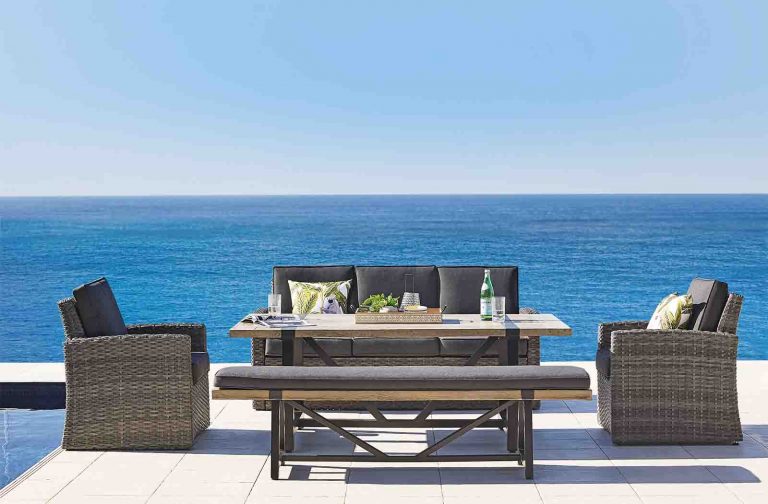
How can I prevent outdoor furniture from fading in the sun?
To prevent outdoor furniture from fading in the sun, you can take several measures to protect the furniture and extend its lifespan. Here are some tips to consider:
1. Choose Fade-Resistant Materials:
Opt for outdoor furniture made from fade-resistant materials. Look for materials specifically designed to withstand sun exposure, such as UV-resistant plastics, fade-resistant fabrics, or furniture with a protective coating.
2. Apply UV-Protective Sealants:
Coat your outdoor furniture with a UV-protective sealant or finish. These products create a barrier between the furniture and the sun’s UV rays, helping to prevent fading and discoloration.
3. Use Protective Covers:
When the furniture is not in use, cover it with protective covers specifically designed for outdoor furniture. These covers help shield the furniture from direct sunlight and other elements, preventing fading and damage.
4. Provide Shade:
Position your outdoor furniture in shaded areas whenever possible. Natural shade provided by trees or umbrellas can help reduce the direct exposure to sunlight, minimizing the risk of fading.
5. Utilize Umbrellas or Canopies:
Consider incorporating umbrellas or canopies into your outdoor furniture setup. These shade-providing structures can be adjusted to block the sun’s rays and protect the furniture from excessive exposure.
6. Rearrange Furniture Periodically:
Rotate and rearrange your outdoor furniture periodically. This helps distribute the effects of sun exposure more evenly across the furniture, preventing specific areas from fading more quickly than others.
7. Clean and Maintain Regularly:
Keep your outdoor furniture clean and well-maintained. Regularly remove dirt, debris, and stains, as they can contribute to the fading process. Follow the manufacturer’s instructions for proper cleaning and maintenance.
8. Store During Extreme Weather:
If possible, store your outdoor furniture indoors or in a covered area during extreme weather conditions, such as intense sunlight or heavy rain. This provides additional protection and extends the life of the furniture.
9. Consider Retractable Awnings or Sunshades:
If you have a larger outdoor space, consider installing retractable awnings or sunshades. These adjustable covers can be extended to block the sun’s rays when needed, protecting the outdoor furniture from excessive sunlight.
By implementing these preventive measures, you can significantly reduce the risk of fading and keep your outdoor furniture looking vibrant and beautiful over time.
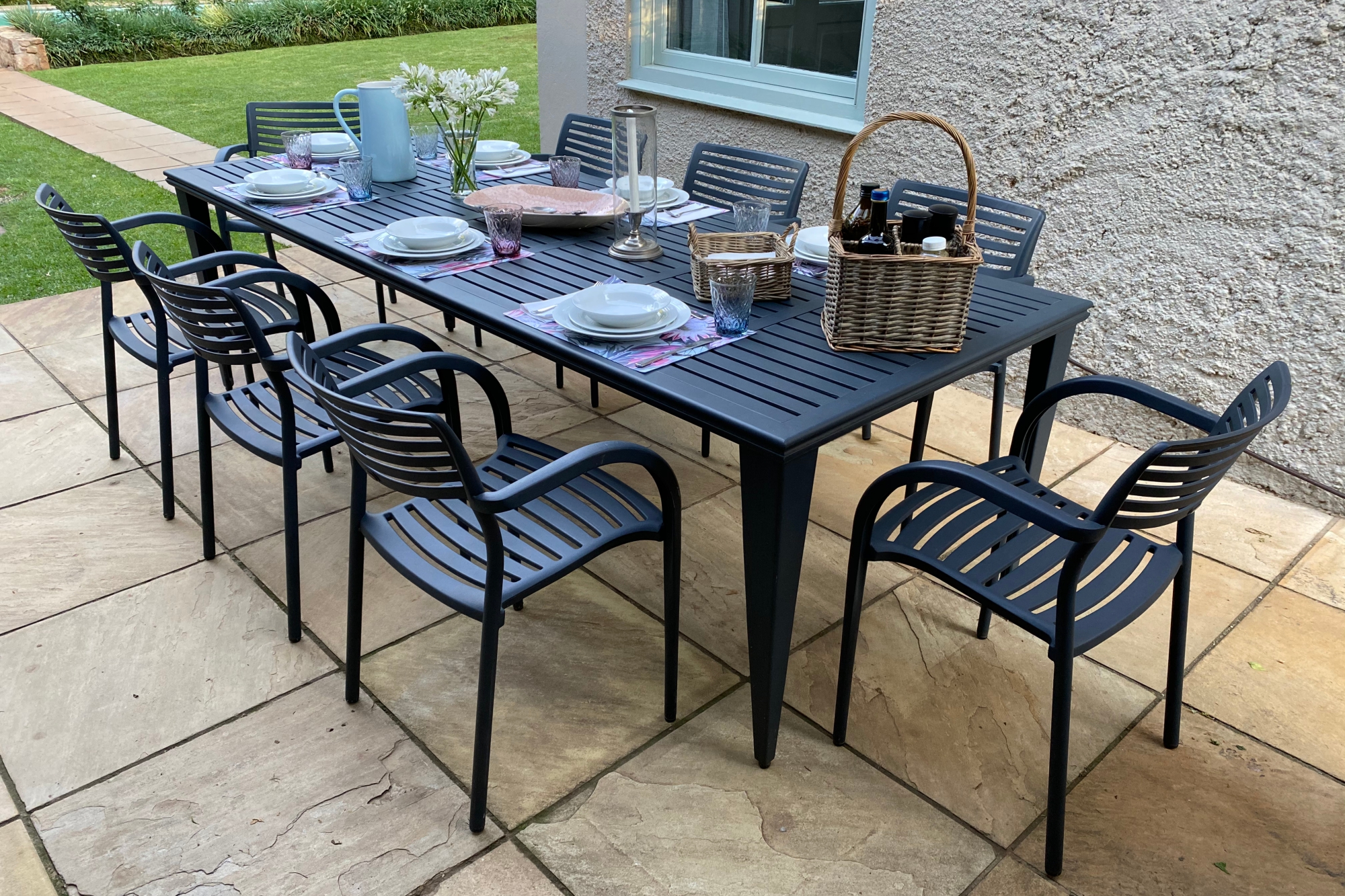
How do I choose the right size outdoor furniture for my space?
Choosing the right size outdoor furniture is crucial to ensure a comfortable and functional outdoor living space. Here are some steps to help you select the appropriate size:
1. Assess Your Space:
Measure the available space in your outdoor area to determine the dimensions you have to work with. Consider the overall layout, including any architectural features, existing structures, and natural elements like trees or slopes that may impact the placement and size of your furniture.
2. Determine the Purpose:
Decide how you plan to use your outdoor space. Will it be primarily for dining, lounging, or a combination of both? This will help determine the type and size of furniture you need.
3. Consider Traffic Flow:
Allow adequate space for people to move around and navigate comfortably. Consider pathways, entrances, and exits to ensure there is enough room for easy movement without feeling cramped.
4. Choose Appropriate Furniture Types:
Based on your space and intended use, select the types of outdoor furniture that best fit your needs. Common options include dining sets, lounge chairs, sofas, benches, and sectional seating arrangements.
5. Take Seat and Table Heights into Account:
Ensure that the seat height of chairs or sofas aligns with the table height for dining sets. This will ensure a comfortable and ergonomic seating arrangement.
6. Allow for Clearance:
Provide ample space around the furniture for easy movement and to avoid feeling cramped. Allow around 18-24 inches of clearance behind chairs for easy access and movement.
7. Consider Scale and Proportion:
Choose furniture that is proportionate to the size of your outdoor space. Oversized furniture can make a small space feel crowded, while undersized furniture may look out of place in a large area.
8. Test and Visualize:
If possible, arrange a mock layout using cardboard or tape to visualize how the furniture will fit in your space. This can help you assess the scale, proportion, and flow before making a final decision.
9. Read Product Specifications:
Pay attention to the dimensions provided by furniture manufacturers. Check the measurements of each piece to ensure it will fit comfortably in your space.
By carefully considering the size, layout, and purpose of your outdoor area, you can choose furniture that fits well and maximizes the functionality and aesthetics of your space.
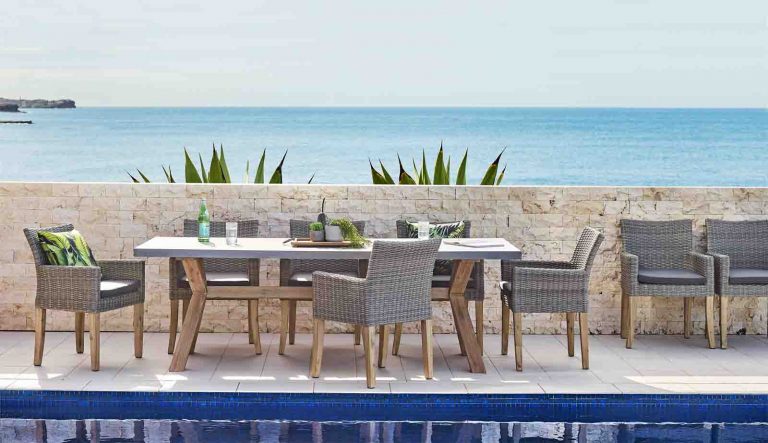
What are the key features to consider when shopping for outdoor furniture?
When shopping for outdoor furniture, there are several key features to consider to ensure you choose the right pieces for your needs and preferences. Here are the key features to keep in mind:
1. Material: The material of the outdoor furniture is crucial as it determines its durability, resistance to the elements, and maintenance requirements. Common materials include teak, aluminum, wrought iron, HDPE wicker, steel, and recycled plastic. Consider the weather conditions, level of maintenance you’re willing to invest, and the desired aesthetic when selecting the material.
2. Comfort: Outdoor furniture should be comfortable for you and your guests to enjoy. Look for features such as ergonomic design, supportive cushions, and adjustable elements like reclining chairs or ottomans. Test the furniture in person, if possible, to ensure it provides the desired level of comfort.
3. Style and Design: Outdoor furniture comes in a variety of styles and designs to suit different tastes and outdoor aesthetics. Consider the overall style of your outdoor space and choose furniture that complements it. Whether you prefer modern, traditional, rustic, or eclectic designs, select furniture that enhances the visual appeal of your patio, deck, or garden.
4. Size and Scale: Before purchasing outdoor furniture, measure the available space and consider the scale of the furniture in relation to the area. Oversized furniture can make a small space feel cramped, while furniture that is too small may look out of place. Ensure the furniture fits well and allows for comfortable movement around it.
5. Functionality: Think about how you plan to use your outdoor space and choose furniture that caters to those needs. Whether you want a dining set for outdoor meals, a lounge area for relaxation, or versatile pieces that can serve multiple purposes, prioritize functionality when selecting outdoor furniture.
6. Maintenance Requirements: Different types of outdoor furniture have varying maintenance requirements. Consider the level of maintenance you’re willing to undertake. Some materials may require regular cleaning, staining, or protective treatments, while others are low-maintenance and only need occasional cleaning. Choose furniture that aligns with your maintenance preferences and capabilities.
7. Budget: Set a budget for your outdoor furniture purchase and consider the quality and longevity of the furniture within that budget. While affordability is important, prioritize quality and durability to ensure your outdoor furniture lasts for years to come.
By considering these key features when shopping for outdoor furniture, you can make informed decisions and select pieces that meet your needs, style, and budget.
editor by CX 2024-04-19
China OEM China Manufacturer 2 Bar 3 Bar 4 Bar Low Pressure Oil Lubricated Rotary Twin Screw Type Air Compressor CE Approved 12v air compressor
Product Description
REDUCE ENERGY CONSUMPTION
Under different conditions,the demand for gas will float.Through a large number of research and calculation of marketdemandCha nun confirmed it.Only about 10% of applications require stable air supplyTherefore,frequency conversioncompressor can play a greater role in energy saving.
Energy cost often accounts for 70% of the life cycle cost of a compressor. The production of compressed air may account for 40% of all electricity costs in the plant.In almost every factory,the gas consumption will vary with different time periods,with its high and low CHINAMFG periods. permanent magnet variable frequency screw air compressor can supply glass completely according to the requirements of gas consumption,which can not only save a lot of energy, but also protect theenvironment for future generations.
INTERIOR STRUCTURE
CUSTOM OIL
COOLED MOTOR
First-stage energy-efficient motor,Low Noise,IP65 protection grade
AUTOMOTIVE GRADE
PERMANENT MAGNET MOTOR
IE4 high efficiency permanent magnet motor.
AUTOMOTIVE PERMANENT MAGNET MOTOR ForN38UH high grade permanent magnet, IP67 protection grade, and fully enclosed structure uniquevacuum epoxy dipping paint,effectively guaranteeing the stable operation of unit.
CHANUN
CUSTOM CONVERTER
Permanent magnet variable-frequency conversion technology, wide voltage. energy-saving ,with a small impact on the power grid.
7 INCH TOUCH SCREEN
Large touch screen.all-round protection monitoring with functions of motor start/stopcontrol, operation control:reversal protection of air compressor: and multi-point temperature detection and control protection.
HIGH MOBILITY (OPTIONAL)
Easy and flexible to rotate. so that the air compressor is able to move conveniently andquickly (optional)
ZheJiang CHINAMFG Machinery Manufacturing Co. , Ltd. is located in HangZhou, ZheJiang .CHINAMFG is a comprehensive screw air compressor manufacturer that engaged in R & D, design, production and sales. It has a plant of 20,000 square meters, including a large production workshop,a comprehensive first-class exhibition hall and a testing laboratory.
Dukas has excellent mechanical engineering designers, an experienced staff team and a professional management team. The production concept focuses on energy-saving and is committed to perfecting and improving the technological process in order to get the core technology of super frequency energy-saving, achieving the characteristics of mute, durability, power saving and safety.
The company has 9 series of products with multiple models. Including Fixed speed air compressor, PM VSD air compressor, PM VSD two-stage air compressor, 4-in-1 air compressor, Oil free water lubrcating air compressor, Diesel portable screw air compressor, Electric portable screw air compressor, Air dryer, Adsorption machine and the matching spare parts.
Dukas adheres to the business philosophy of cooperation and mutual benefit to provide a one-stop service for every customer!
Dukas air compressors not only cover the domestic market but also are exported to more than 20 countries and regions such as South Africa, Australia, Thailand, Russia, Argentina, Canada and so on.
Dukas products have won a good reputation from users for their excellent quality and style. The company has always adhered to the concept of quality first, service first and dedication to providing every customer with excellent products and meticulous after-sales service!
Dukas warmly welcome customers to visit our factory and establish a wide range of cooperation!
Frequency Asked Question:
Q1: Are you factory or trade company?
A1: We are factory.
Q2: What the exactly address of your factory?
A2: Our Factory is Located in Xihu (West Lake) Dis. County, HangZhou City, ZheJiang Province, China.
Q3: Will you provide spare parts of your products?
A3: Yes, We provide all parts to customer, so you can do repair or maintenance without trouble.
Q4: Can you accept OEM orders?
A4: Yes, with professional design team, OEM orders are highly welcome.
Q5: How long will you take to arrange production?
A5: Immediate delivery for stock products.380V 50HZ we can delivery the goods within 3-15 days. Other voltage or other color we will delivery within 25-30 days.
Q6: Warranty terms of your machine?
A6: Two years warranty for the machine and technical support always according to your needs.
Q7: Can you provide the best price?
A7:According to your order, we will provide you the best price.
| After-sales Service: | 24 Hours |
|---|---|
| Warranty: | 2 Year |
| Lubrication Style: | Lubricated |
| Cooling System: | Air Cooling |
| Power Source: | AC Power |
| Cylinder Position: | Horizontal |
| Customization: |
Available
|
|
|---|
.webp)
What are the advantages of using rotary vane compressors?
Rotary vane compressors offer several advantages that make them a popular choice for various applications. These compressors are widely used in industries where a reliable and efficient source of compressed air is required. Here are the advantages of using rotary vane compressors:
1. Compact and Lightweight:
Rotary vane compressors are typically compact and lightweight compared to other types of compressors. Their compact design makes them suitable for installations where space is limited, such as in small workshops or mobile applications. The lightweight nature of these compressors allows for easy transportation and maneuverability.
2. High Efficiency:
Rotary vane compressors are known for their high efficiency. The design of the vanes and the compression chamber allows for smooth and continuous compression, resulting in minimal energy losses. This efficiency translates into lower energy consumption and reduced operating costs over time.
3. Quiet Operation:
Rotary vane compressors operate with relatively low noise levels. The design of the compressor, including the use of vibration damping materials and sound insulation, helps to minimize noise and vibrations during operation. This makes rotary vane compressors suitable for applications where noise reduction is important, such as in indoor environments or noise-sensitive areas.
4. Oil Lubrication:
Many rotary vane compressors utilize oil lubrication, which provides several benefits. The oil lubrication helps to reduce wear and friction between the moving parts, resulting in extended compressor life and improved reliability. It also contributes to better sealing and improved efficiency by minimizing internal leakage.
5. Versatile Applications:
Rotary vane compressors are versatile and can be used in a wide range of applications. They are suitable for both industrial and commercial applications, including automotive workshops, small manufacturing facilities, dental offices, laboratories, and more. They can handle various compressed air requirements, from light-duty tasks to more demanding applications.
6. Easy Maintenance:
Maintenance of rotary vane compressors is relatively straightforward. Routine maintenance tasks typically include oil changes, filter replacements, and periodic inspection of vanes and seals. The simplicity of the design and the availability of replacement parts make maintenance and repairs easier and more cost-effective.
These advantages make rotary vane compressors an attractive choice for many applications, providing reliable and efficient compressed air solutions.
.webp)
What are the environmental considerations when using air compressors?
When using air compressors, there are several environmental considerations to keep in mind. Here’s an in-depth look at some of the key factors:
Energy Efficiency:
Energy efficiency is a crucial environmental consideration when using air compressors. Compressing air requires a significant amount of energy, and inefficient compressors can consume excessive power, leading to higher energy consumption and increased greenhouse gas emissions. It is important to choose energy-efficient air compressors that incorporate features such as Variable Speed Drive (VSD) technology and efficient motor design, as they can help minimize energy waste and reduce the carbon footprint.
Air Leakage:
Air leakage is a common issue in compressed air systems and can contribute to energy waste and environmental impact. Leaks in the system result in the continuous release of compressed air, requiring the compressor to work harder and consume more energy to maintain the desired pressure. Regular inspection and maintenance of the compressed air system to detect and repair leaks can help reduce air loss and improve overall energy efficiency.
Noise Pollution:
Air compressors can generate significant noise levels during operation, which can contribute to noise pollution. Prolonged exposure to high noise levels can have detrimental effects on human health and well-being and can also impact the surrounding environment and wildlife. It is important to consider noise reduction measures such as sound insulation, proper equipment placement, and using quieter compressor models to mitigate the impact of noise pollution.
Emissions:
While air compressors do not directly emit pollutants, the electricity or fuel used to power them can have an environmental impact. If the electricity is generated from fossil fuels, the associated emissions from power plants contribute to air pollution and greenhouse gas emissions. Choosing energy sources with lower emissions, such as renewable energy, can help reduce the environmental impact of operating air compressors.
Proper Waste Management:
Proper waste management is essential when using air compressors. This includes the appropriate disposal of compressor lubricants, filters, and other maintenance-related materials. It is important to follow local regulations and guidelines for waste disposal to prevent contamination of soil, water, or air and minimize the environmental impact.
Sustainable Practices:
Adopting sustainable practices can further reduce the environmental impact of using air compressors. This can include implementing preventive maintenance programs to optimize performance, reducing idle time, and promoting responsible use of compressed air by avoiding overpressurization and optimizing system design.
By considering these environmental factors and taking appropriate measures, it is possible to minimize the environmental impact associated with the use of air compressors. Choosing energy-efficient models, addressing air leaks, managing waste properly, and adopting sustainable practices can contribute to a more environmentally friendly operation.
.webp)
How does an air compressor work?
An air compressor works by using mechanical energy to compress and pressurize air, which is then stored and used for various applications. Here’s a detailed explanation of how an air compressor operates:
1. Air Intake: The air compressor draws in ambient air through an intake valve or filter. The air may pass through a series of filters to remove contaminants such as dust, dirt, and moisture, ensuring the compressed air is clean and suitable for its intended use.
2. Compression: The intake air enters a compression chamber, typically consisting of one or more pistons or a rotating screw mechanism. As the piston moves or the screw rotates, the volume of the compression chamber decreases, causing the air to be compressed. This compression process increases the pressure and reduces the volume of the air.
3. Pressure Build-Up: The compressed air is discharged into a storage tank or receiver where it is held at a high pressure. The tank allows the compressed air to be stored for later use and helps to maintain a consistent supply of compressed air, even during periods of high demand.
4. Pressure Regulation: Air compressors often have a pressure regulator that controls the output pressure of the compressed air. This allows the user to adjust the pressure according to the requirements of the specific application. The pressure regulator ensures that the compressed air is delivered at the desired pressure level.
5. Release and Use: When compressed air is needed, it is released from the storage tank or receiver through an outlet valve or connection. The compressed air can then be directed to the desired application, such as pneumatic tools, air-operated machinery, or other pneumatic systems.
6. Continued Operation: The air compressor continues to operate as long as there is a demand for compressed air. When the pressure in the storage tank drops below a certain level, the compressor automatically starts again to replenish the compressed air supply.
Additionally, air compressors may include various components such as pressure gauges, safety valves, lubrication systems, and cooling mechanisms to ensure efficient and reliable operation.
In summary, an air compressor works by drawing in air, compressing it to increase its pressure, storing the compressed air, regulating the output pressure, and releasing it for use in various applications. This process allows for the generation of a continuous supply of compressed air for a wide range of industrial, commercial, and personal uses.


editor by CX 2023-11-08